
The Conversion Most Phoenix Homes Actually Need
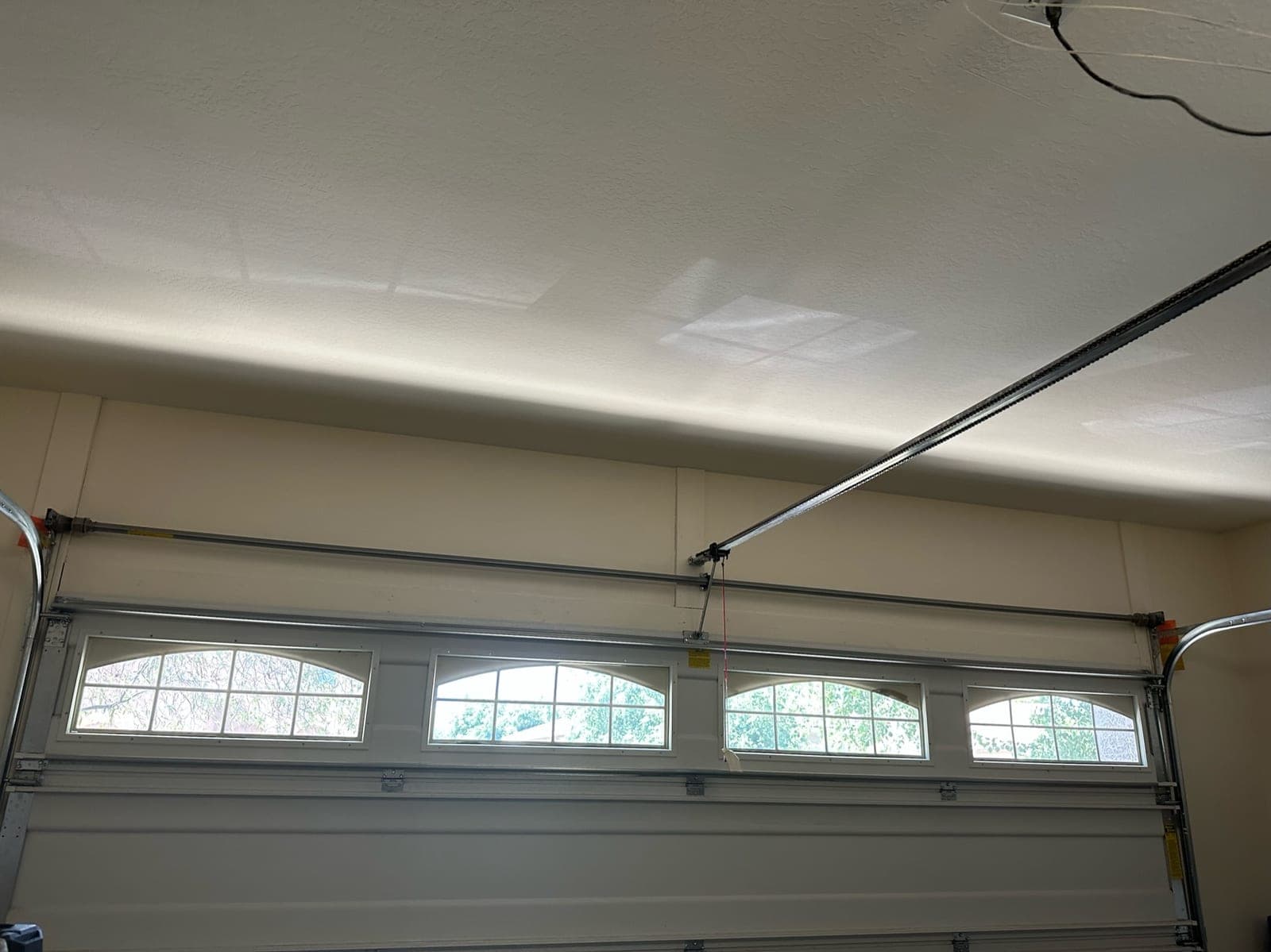
Wayne Dalton fitted the TorqueMaster system to a lot of houses built here through the 1990s and 2000s. Instead of springs you can see, the spring is sealed inside a steel tube that runs above the door, wound by a plastic-geared winder at the end.
It looks tidier, and that is the whole of its advantage. When the spring inside breaks there is no outward sign of it beyond a door that has suddenly become far too heavy, and nothing can be inspected without pulling the tube apart. Parts come only from Wayne Dalton, the winders wear out on their own, and a system that fails quietly is a system nobody catches early.
What We Put In Instead
A standard torsion setup: springs mounted openly on a shaft above the opening, sized to the actual weight of your door, with cable drums and bearings to match.
- You can see it. A broken torsion spring shows a visible gap, so a technician can diagnose it from the driveway.
- Parts are standard. Any garage door company in the Valley carries them, so you are never waiting on one manufacturer.
- It is sized to your door. Springs are chosen for its real weight rather than whatever the builder ordered in bulk.
- It lasts longer. A standard cycle-rated torsion spring will normally outlast the TorqueMaster it replaced, and a high-cycle upgrade lasts longer again.
- It can be serviced. Bearings, drums and cables are all reachable without dismantling a sealed tube.
What About Extension Springs?
Extension springs are the long springs that run along the horizontal tracks on either side and stretch as the door comes down. They are common in other parts of the country and rare in Phoenix, and where they do turn up here it is almost always on an old one-piece tilt-up door.
If that is what you have, converting to torsion is still the right call, mainly for the safety of it: an extension spring that snaps under load can throw pieces across the garage unless it is properly contained. But it is not the job we are usually called out for, so do not assume it is yours.
How to Tell What You Have
- A sealed steel tube above the door with a plastic winder at one end, and no spring in sight: TorqueMaster.
- One or two springs wound around a shaft above the door: torsion already, nothing to convert.
- Long springs stretched along the tracks at the sides: extension springs, most likely on a one-piece door.
- A door that has suddenly become far too heavy to lift by hand, with nothing visibly broken: a TorqueMaster spring that has failed inside the tube.
What the Job Involves
A conversion is a half-day job on most doors, and we carry the parts on the truck:
- Weigh and measure the door, so the new springs are matched to it rather than guessed.
- Remove the TorqueMaster tube, winders and end brackets in full.
- Fit a new torsion shaft, spring anchor bracket, bearings and cable drums.
- Install torsion springs cycle-rated for your door, and wind them to the right tension.
- Replace the lift cables and check the rollers, hinges and opener while everything is apart.
- Balance and test the door, then clear up and take the old system away.
Why Homeowners Choose State 48
We’re not just fixing garage doors, we’re building trust with every job. When it comes to something as important as your garage door springs, you want it done right the first time. Here’s why people keep calling us:
- ✅ Friendly, trained techs (no confusing lingo or upsells)
- ✅ Quality torsion springs built to last
- ✅ Fast response times across the Valley
- ✅ Upfront pricing with no hidden fees
- ✅ 5-star service backed by happy customers
Garage Door Spring Conversion: Frequently Asked Questions
What is a garage door spring conversion?
Replacing an outdated spring system, almost always a Wayne Dalton TorqueMaster, with a standard torsion setup: springs mounted openly on a shaft above the door, sized to the door's actual weight, with matching cable drums and bearings.
How do I know if I have a TorqueMaster system?
Look above the door. A sealed steel tube with a plastic winder at one end and no visible spring is a TorqueMaster. One or two springs wound around a shaft above the door is already torsion. Long springs stretched along the side tracks are extension springs, usually on an older one-piece door.
Why convert instead of just replacing the TorqueMaster spring?
A broken TorqueMaster spring cannot be seen or inspected without dismantling the tube, parts come only from Wayne Dalton, and the plastic winders wear out on their own. A torsion setup can be diagnosed from the driveway, uses standard parts any Valley company carries, is sized to your door, and lasts longer.
How much does a spring conversion cost?
$649 to $1,199 for single or double car doors, with 2- or 5-year warranty options. That includes removing the TorqueMaster tube, winders and brackets and fitting the new torsion shaft, springs, bearings, drums and lift cables.
How long does the conversion take?
About half a day on most doors. We carry the parts on the truck, so it is normally completed in one visit.
What about extension springs?
Extension springs are rare in Phoenix and mostly found on old one-piece tilt-up doors. If that is what you have, converting to torsion is still the right call, mainly for safety: an extension spring that snaps under load can throw pieces across the garage.
Is the conversion done the same day I call?
Often, yes. If your door has suddenly become far too heavy to lift by hand with nothing visibly broken, the spring inside the tube has most likely failed; call (602) 329-6018 and we will confirm what you have and schedule it.