
March 19, 2025
If your garage turns into an oven by mid-morning every summer, an insulated garage door is one of the more practical upgrades you can make. It won't turn your garage into a climate-controlled room, but it will cut down on how much heat makes it through that door in the first place, which matters when it's the biggest opening on your house. Here's what actually matters when you're comparing options for a Phoenix-area home.
Why It Matters More Here Than in Milder Climates
A garage door is typically the largest single opening in a home's exterior wall. An uninsulated steel door has almost nothing standing between the outside air and your garage, so on a triple-digit day the garage itself gets hot fast, and if it's attached to the house, some of that heat transfers into the rooms next to it. Your HVAC system ends up working harder to compensate. An insulated door won't eliminate that entirely, but a well-insulated door can meaningfully cut how much heat gets into the garage compared to a bare single-layer door.
- Keeps the garage itself noticeably cooler on hot days
- Reduces heat transfer into rooms that share a wall with the garage
- Takes some of the load off your air conditioning system
- Helps protect vehicles, tools, and anything else stored in there from constant heat swings
Understanding Door Construction and R-Value
R-value is simply a measure of how well a material resists heat flow. The higher the number, the better it insulates. For garage doors, R-value comes down to construction:
- Single-layer steel doors have no insulation at all. They're the least expensive option but offer essentially no thermal or sound barrier
- Double-layer doors add a layer of foam insulation behind the steel skin, which is a real improvement over a single-layer door
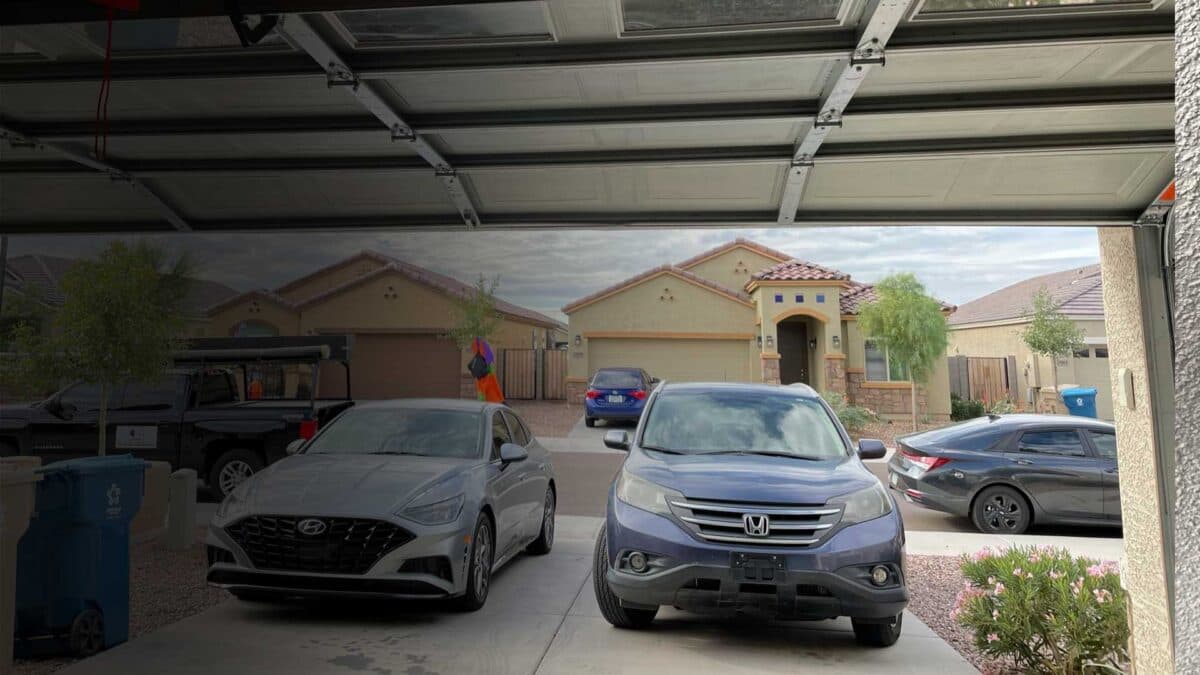
- Triple-layer, steel-back doors sandwich a thicker insulation core between two steel panels. These are generally the quietest, most rigid, and best-insulated option, and they cost more up front
Don't rely on R-value alone, though. Weatherstripping, seals around the panels, and how tightly the door fits its tracks all affect how much air actually gets through, and a high-R-value door with poor seals will underperform a lower-R-value door that's properly sealed and installed.
Insulation Kits vs. a New Insulated Door
If you have an existing uninsulated door and aren't ready to replace it, a foam insulation kit is a lower-cost option. These kits typically use rigid foam board or reflective panels cut to fit each section of the door, and they're a genuine, if modest, upgrade over doing nothing.
That said, a kit has limits. It insulates the panels but doesn't address weatherstripping, gaps around the frame, or the door's overall rigidity, and results vary a lot depending on how carefully it's installed. If your door is old, dented, or due for replacement anyway, a factory-insulated steel-back door will outperform a kit added to an aging door and is usually the better long-term move, especially for a garage that shares a wall with living space.
Other Benefits Beyond Temperature
Insulation isn't just about heat. The added mass and structure of an insulated door bring a few other advantages that Arizona homeowners tend to notice.
- Noise reduction: a thicker, insulated door dampens street noise and cuts down on the rattling and vibration you get from a thin single-layer door
- Durability: the insulation layer adds rigidity, so insulated doors typically resist dents and warping better than bare steel panels
- Curb appeal and resale: buyers in this market increasingly notice and ask about garage door quality, and an insulated door reads as a more finished, higher-end feature
- Quieter operation, which matters if there's a bedroom or living space above or next to the garage
What to Look For When Choosing a Door
Once you've decided insulation is worth it, the practical decision comes down to a handful of factors:
- Construction type (double-layer vs. triple-layer steel-back) based on your budget and how much of a difference you need
- Quality of weatherstripping and panel seals, not just the insulation core
- Whether the door style and finish fit your home's exterior and, if applicable, your HOA's requirements
- Professional installation, since a poorly fitted door undermines the insulation no matter how good the panels are
Not sure which construction makes sense for your garage?
View Garage Door Insulation OptionsKeeping an Insulated Door in Good Shape
Insulated doors generally need less upkeep than bare steel doors, but they're not maintenance-free. A quick annual check goes a long way.
- Check weatherstripping once a year and replace it if it's cracked, brittle, or pulling away
- Lubricate rollers, hinges, and springs periodically to keep the door moving smoothly
- Watch for signs the door is out of balance or feels heavier than it used to, which usually points to a spring issue rather than anything related to the insulation itself
Is It Worth It for Your Home?
For most Phoenix-area homes, especially garages attached to living space, an insulated door is a solid upgrade: it takes some of the edge off summer heat, quiets the garage down, and tends to hold up better over time than a bare steel door. If your garage is detached, rarely used, or you're on a tight budget, a well-installed insulation kit on your existing door can still make a noticeable difference without the cost of full replacement. Either way, the details of installation and sealing matter as much as the door itself.
Want a straight answer on what's right for your garage?